Main Content
Research article published by Seowoo Lee, Assistant Extension Specialist in Farm Viability at DAFRE
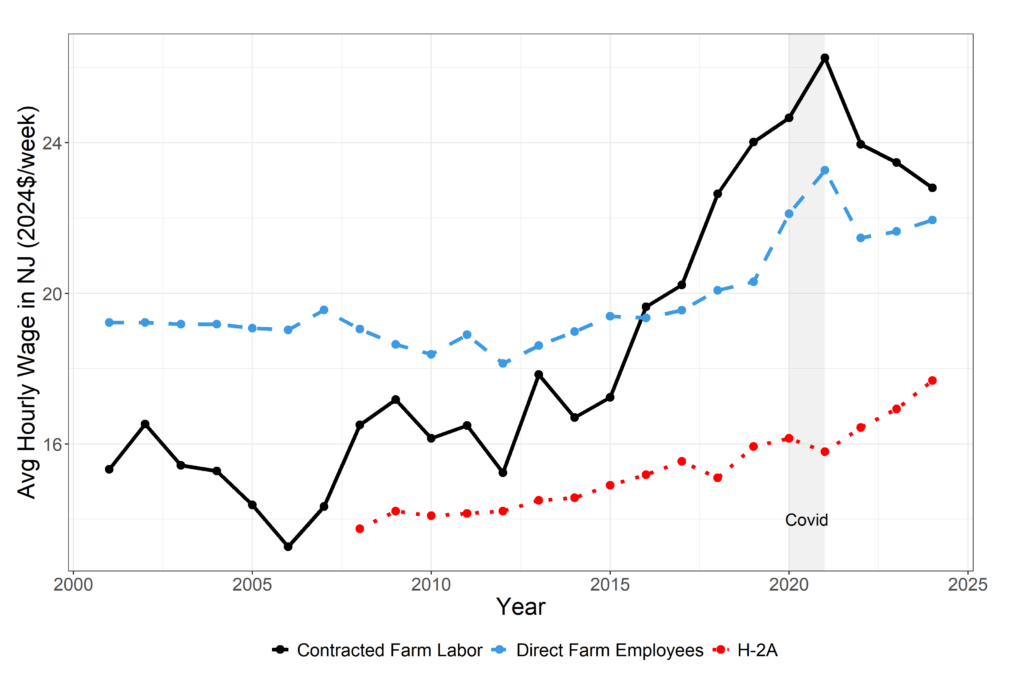
Professor Seowoo Lee, has published a new extension factsheet (FS1381) detailing the evolving state of New Jersey’s agricultural workforce. As the state’s crop production remains highly labor-intensive, the factsheet describes that growers are navigating a rapidly shrinking pool of traditional workers alongside sharp increases in wage rates.
Key Trends from the Report:
- Declining Direct Hires: Direct farm employment in the region has reached its lowest level since 2000.
- Rise of Contingent Labor: To fill the gap, farms are shifting to third-party contractors and the H-2A guest worker program. H-2A certifications in NJ have jumped from 500 in 2008 to over 2,500 in 2025.
- Rising Wages: Agricultural wage growth is outpacing the state average. Between 2019 and 2024, farmworker pay rose by 8%, while the general state wage grew by only 1%.
- Southern NJ Impact: Labor demand remains highest in Cumberland, Atlantic, and Gloucester counties.
The data suggests that increasing competition and rising costs for seasonal labor are now the primary hurdles for farm viability in New Jersey.
Read the full factsheet at njaes.rutgers.edu/FS1381/.